17
February
2026
Android vs iOS App Development – Which Is Better?
Picking a platform for your mobile app is a technical decision and a financial one. Whether you’re hiring your first developer or scaling an established brand, the Android vs. iOS and native vs. hybrid choice is crucial.
Android vs. iOS: The Strategic Divide
In 2026, it usually comes down to two things: where your users are and how you’re going to make money.
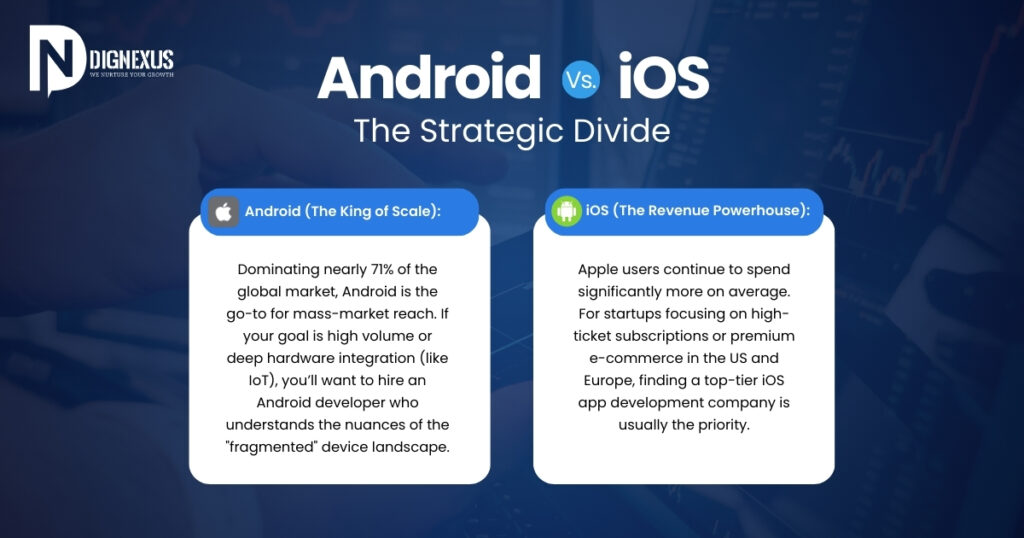
- Android (The King of Scale): Android owns about 71% of the global market, so if you’re going for mass reach, it’s the obvious choice. Planning on high volume or need deep hardware integration for things like IoT? You’ll want an Android developer who knows how to handle all the different devices out there.
- iOS (The Revenue Powerhouse): Apple users still spend way more on average. So, if you’re a startup selling premium subscriptions or high-end products in the US or Europe, you’ll probably want to focus on finding a solid iOS developer first.
Android vs iOS: Revenue Comparison
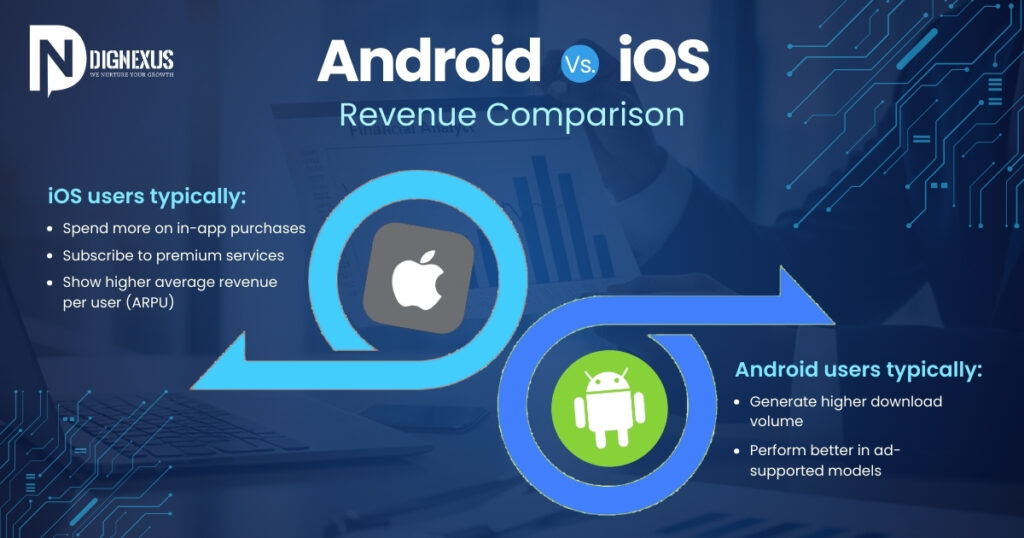
One of the biggest differences between Android and iOS development is how they generate revenue.
iOS users generally:
- Spend more on in-app purchases
- Subscribe to premium services
- Show higher average revenue per user (ARPU)
Android users usually:
- Generate higher download volume
- Perform better in ad-supported models
So, it’s not really about Android vs. iOS being better. The question is:
Which platform aligns with your revenue model?
Native vs Hybrid App Development: Which Approach Works Best?
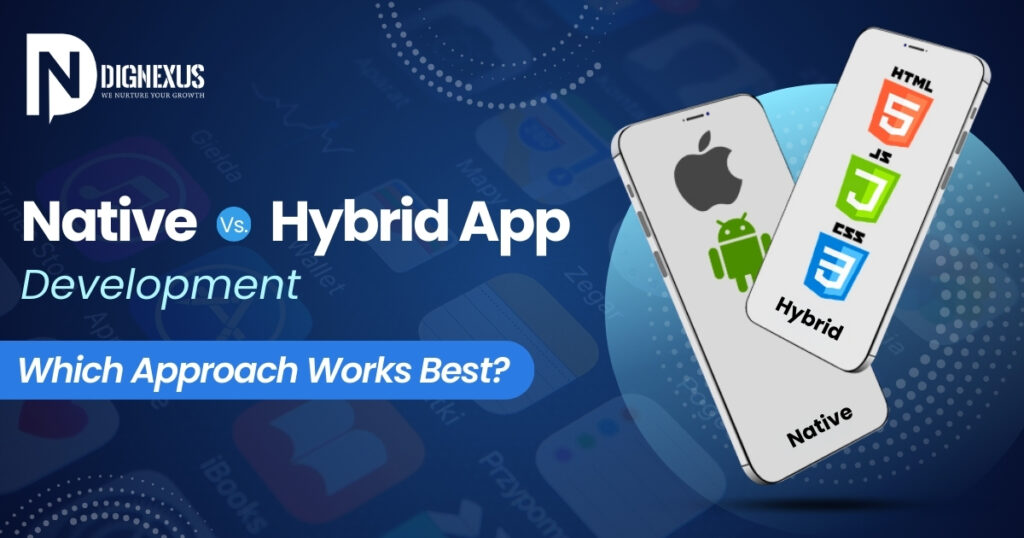
After you choose your platform, you’ll need to figure out your architecture.
Native App Development
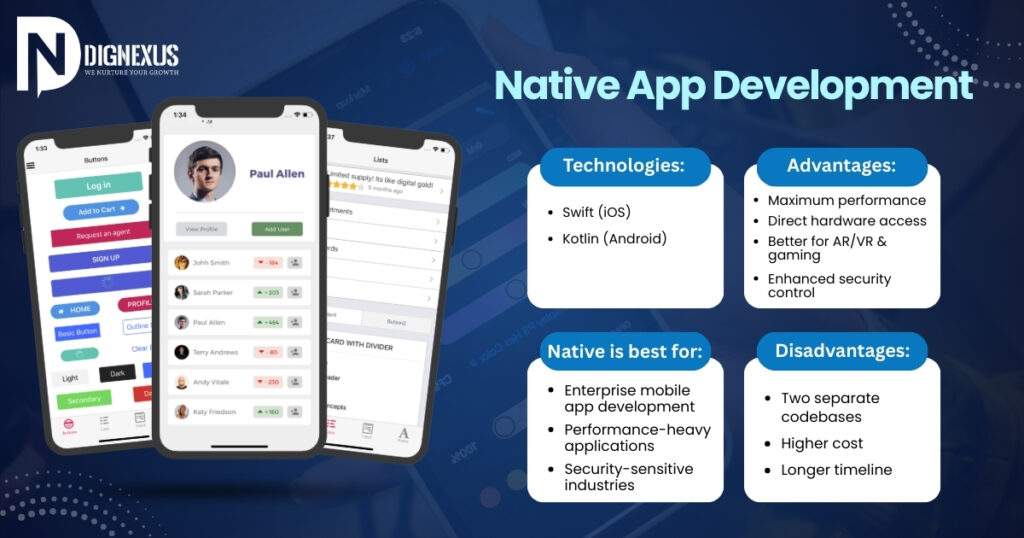
Technologies:
- Swift (iOS)
- Kotlin (Android)
Advantages:
- Maximum performance
- Direct hardware access
- Better for AR/VR & gaming
- Enhanced security control
Disadvantages:
- Two separate codebases
- Higher cost
- Longer timeline
Native is best for:
- Enterprise mobile app development
- Performance-heavy applications
- Security-sensitive industries
Hybrid / Cross-Platform Development
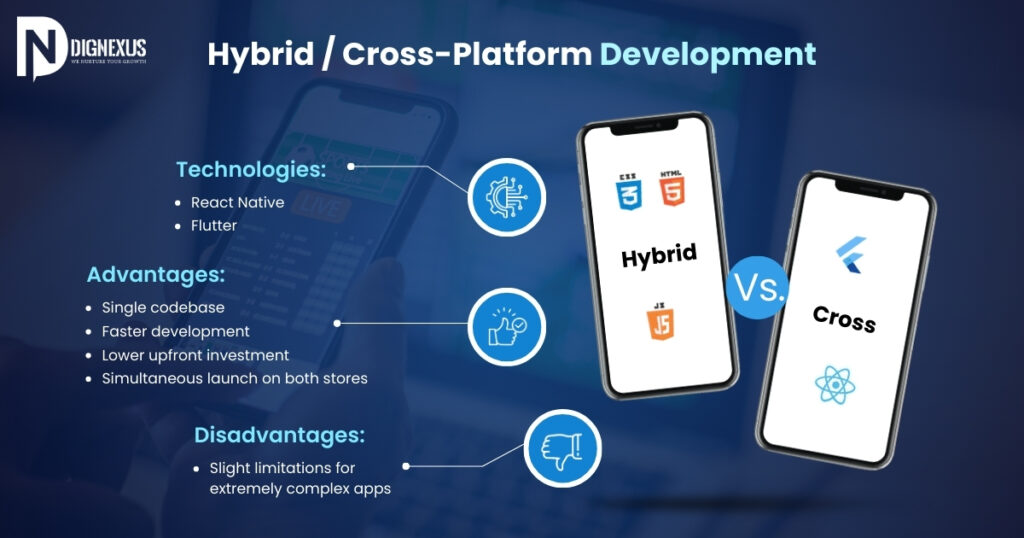
Technologies:
Advantages:
- Single codebase
- Faster development
- Lower upfront investment
- Simultaneous launch on both stores
Disadvantages:
- Slight limitations for extremely complex apps
For most startups and small businesses, the native vs. hybrid debate comes down to performance versus speed.
By 2026, tools like React Native and Flutter have gotten good enough that they work well for most business apps.
Cost of Android vs iOS App Development
Development costs vary based on your features, integrations, and overall complexity.
Here’s a simplified comparison:
| Factor | Android | iOS |
| Development Cost | Similar range | Similar range |
| Testing Complexity | Higher (device fragmentation) | Lower (limited devices) |
| Maintenance | Moderate to high | Moderate |
Building natively for both platforms means you’re basically paying double since you need separate codebases.
Cross-platform cuts your initial costs, but you may hit snags with complex features later on.
The cheapest route upfront doesn’t always pan out as the best deal over time.
Android vs iOS for Startups
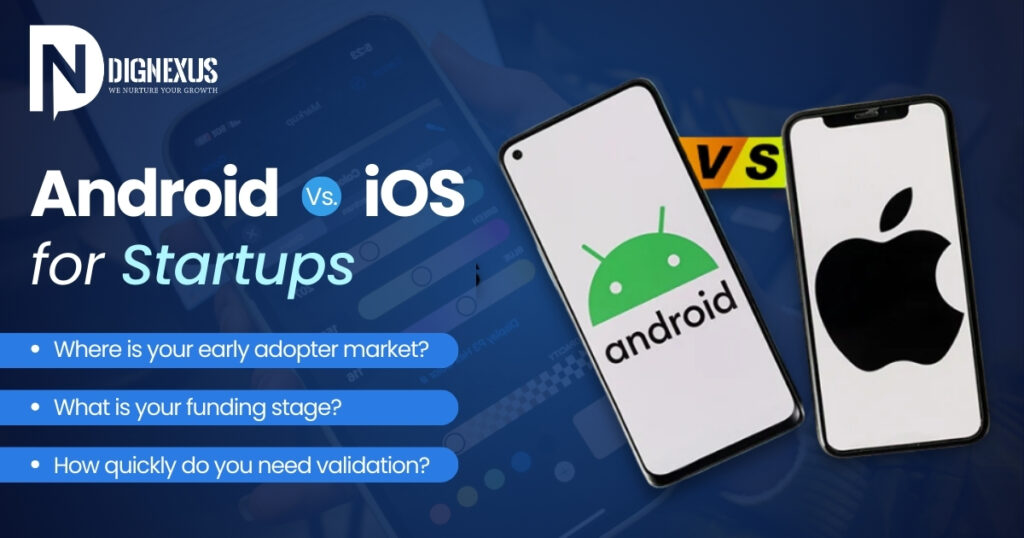
For startups, speed beats perfection.
You have to decide:
- Where is your early adopter market?
- What is your funding stage?
- How quickly do you need validation?
Startup Strategy Recommendations:
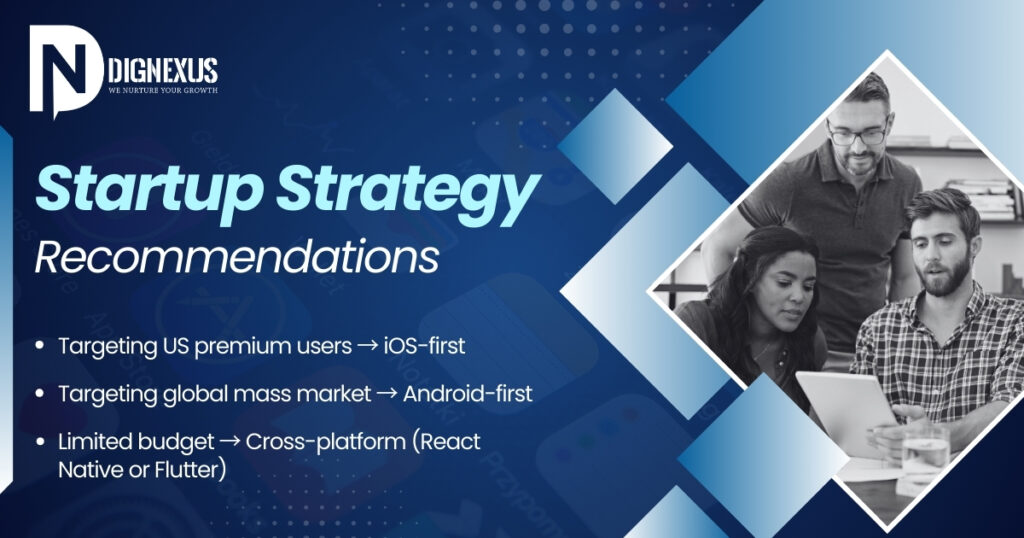
- Targeting US premium users → iOS-first
- Targeting global mass market → Android-first
- Limited budget → Cross-platform (React Native or Flutter)
Launch quickly and adjust later based on the data.
Platform Strategy for SMEs

For small and medium businesses:
- Analyse existing customer device usage
- Consider CRM & backend integration
- Focus on retention & engagement features
Most small and medium businesses do best by launching on both platforms with a cross-platform framework.
You get wider reach without blowing your budget.
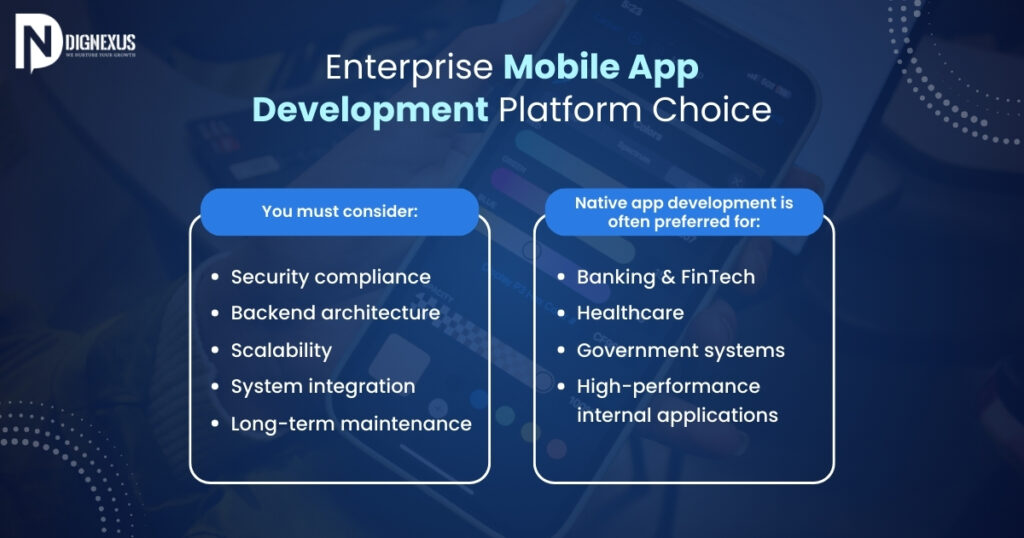
Enterprise Mobile App Development Platform Choice
If you’re running an enterprise, the decision gets trickier.
You must consider:
- Security compliance
- Backend architecture
- Scalability
- System integration
- Long-term maintenance
Native apps are usually the better choice for:
- Banking & FinTech
- Healthcare
- Government systems
- High-performance internal applications
That said, hybrid can work if you build it right.
For enterprise, it’s really about the infrastructure, not just how it looks.
How to Decide the Best Platform for Mobile App Development

Here’s what to consider:
- Where is your primary market located?
- Is your model subscription-based or ad-based?
- Is performance critical?
- Do you need hardware integration?
- What is your scalability plan?
- What is your available budget?
These questions will help point you in the right direction.
The Android vs. iOS debate isn’t about which one’s better.
It’s about what fits your strategy.
The best platform is the one that works for your:
- Market positioning
- Revenue model
- Budget
- Long-term growth roadmap
Decide based on your business reality, not the latest trends.
FAQ:
Q: Android vs iOS – which is better for mobile app development?
A: There is no universal winner. Android offers global reach, while iOS provides higher per-user revenue in premium markets. The better choice depends on your target audience and monetisation strategy.
Q: Is Android app development more expensive than iOS?
A: Development costs are similar, but Android testing can be more complex due to device fragmentation.
Q: Is Native better than Hybrid app development?
A: Native provides maximum performance and control, while hybrid offers faster development and lower cost. The right choice depends on project complexity.
Q: Should startups launch on both platforms?
A: If budget allows, yes. Otherwise, choose the platform where your target audience is strongest.
Q: What is the best platform for enterprise mobile app development?
A: Enterprises often prefer native development for performance, security, and integration control, but hybrid solutions can also be viable with proper architecture.