02
March
2026
Real Estate Software Development Company: How to Build a Scalable Digital Property Ecosystem
Real estate today goes far beyond listings and site visits. Buyers and sellers now expect automation, fast responses, data-driven insights, and a seamless digital experience at every step.
Real estate businesses across the USA, UK, Australia, UAE, and other growing markets are no longer treating their tools as separate solutions. They are bringing their property management software, CRM platforms, and mobile applications together into one system that can grow with them.
Spreadsheets and disconnected tools might be holding your business back more than you realize — both in efficiency and revenue.
This is where working with a specialized real estate software development company really pays off.
Building technology is one thing. Understanding your business goals and building around them is another.
Why Global Real Estate Businesses Need Custom Software
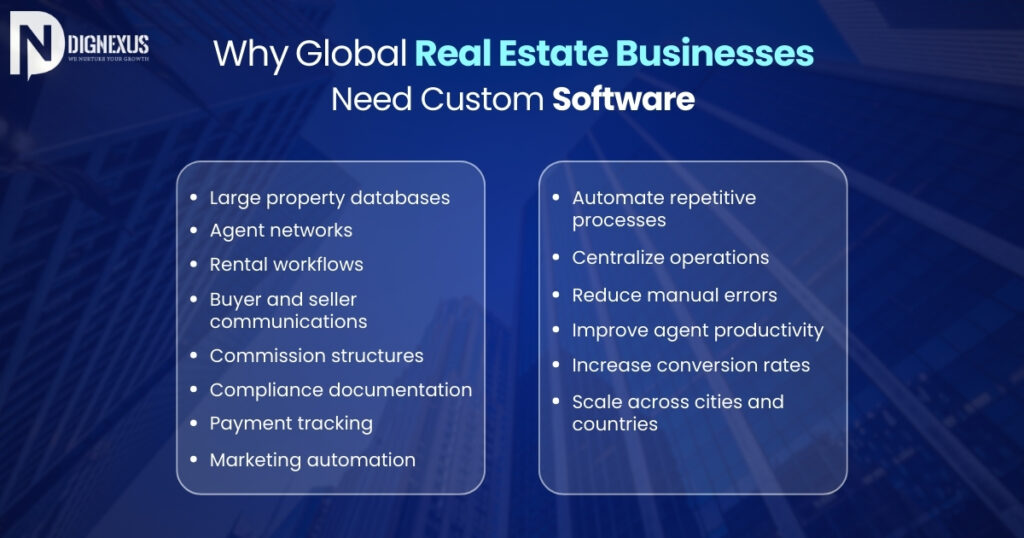
Here is what property businesses are dealing with today:
- Large property databases
- Agent networks
- Rental workflows
- Buyer and seller communications
- Commission structures
- Compliance documentation
- Payment tracking
- Marketing automation
Generic SaaS platforms are rarely built for the way your business actually works — unique workflows, regional compliance rules, and commission structures included.
Here is what a custom-built real estate software solution makes possible:
- Automate repetitive processes
- Centralize operations
- Reduce manual errors
- Improve agent productivity
- Increase conversion rates
- Scale across cities and countries
Most importantly, you get to own your technology.
What Does a Real Estate Software Development Company Actually Build?
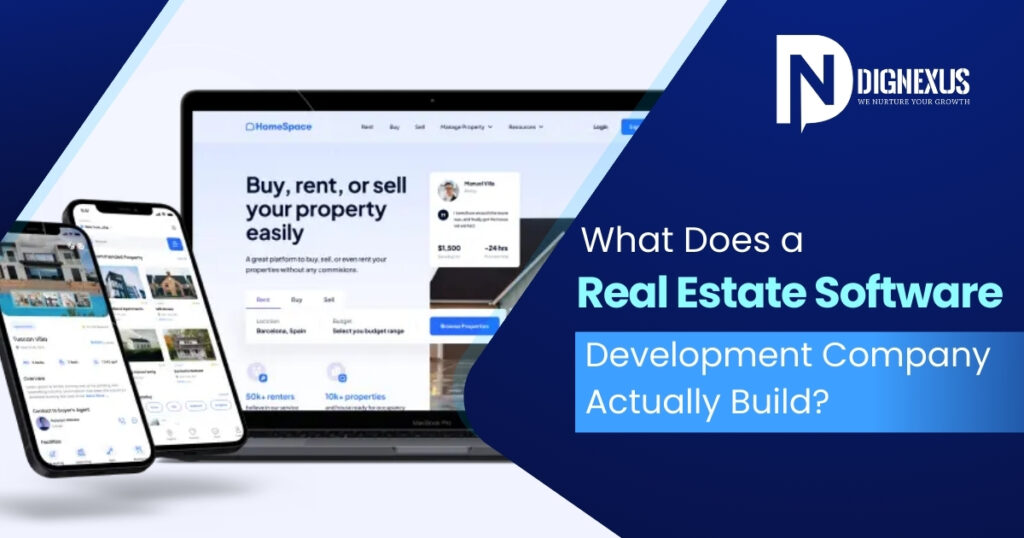
A serious development partner builds more than a dashboard. They build an entire ecosystem around your business.
1. Property Management Software Development
Managing rentals or multiple assets comes down to one thing — having the right digital infrastructure in place.
Here is what a custom property management software solution usually covers:
- Tenant management
- Lease tracking
- Rent collection automation
- Maintenance request tracking
- Accounting integration
- Owner reporting dashboards
- Multi-property analytics
Everything runs from one place, instead of being spread across four or five different tools.
2. Real Estate CRM Development
Most agencies face difficulty with:
- Lead leakage
- Poor follow-ups
- Manual lead assignments
- No performance tracking
Here is what a well-built real estate CRM should actually include:
- Automated lead capture
- Lead scoring
- Agent assignment workflows
- Follow-up reminders
- Email and SMS automation
- Sales pipeline visualization
- Conversion analytics
When CRM and property management systems work together, the impact on operational efficiency is significant.
3. Integration with Mobile Applications
Today’s buyers won’t settle for anything less than a seamless mobile experience.
Your backend software and mobile platform need to work as one. If you’re planning to expand into mobile, it’s worth working with a real estate app development company that builds both systems with integration in mind from the start.
A lot of businesses run into trouble when the app is developed independently from the backend — the result is performance issues, sync failures, and a fragmented experience.
Getting the architecture right from day one makes all the difference.
The Financial Impact of Custom Real Estate Software
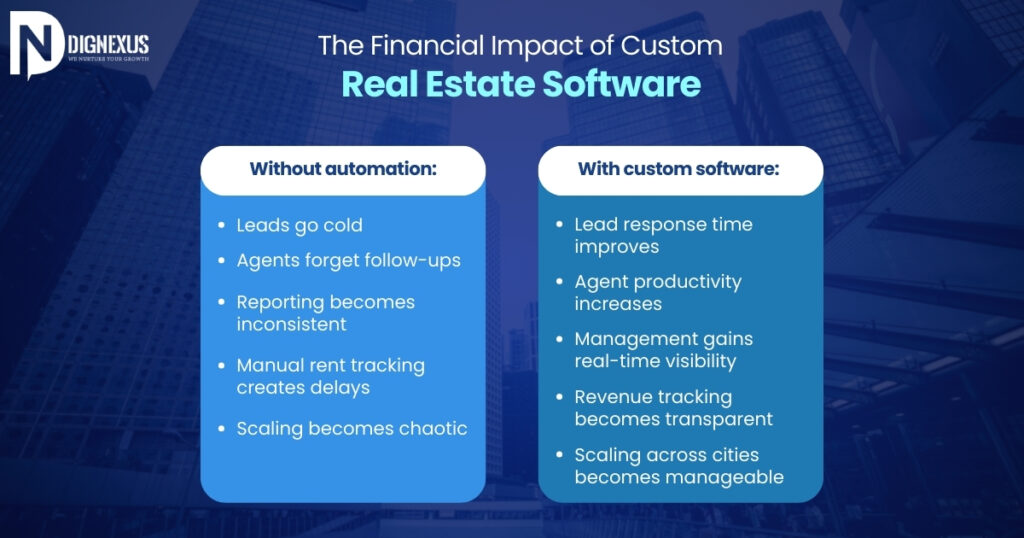
There is a smarter way to look at this.
Without automation:
- Leads go cold
- Agents forget follow-ups
- Reporting becomes inconsistent
- Manual rent tracking creates delays
- Scaling becomes chaotic
With custom software:
- Lead response time improves
- Agent productivity increases
- Management gains real-time visibility
- Revenue tracking becomes transparent
- Scaling across cities becomes manageable
In many cases, the return on investment covers the development costs within just a few months of going live.
Real Estate App Development Cost: Why It Matters in Software Planning
Most property owners focus on the cost of building a real estate app before thinking about whether the app strategy actually aligns with their business goals.
If you build:
- A mobile app without backend automation → inefficiency
- Backend software without mobile access → reduced engagement
Development cost depends on:
- Feature complexity
- Integration requirements
- Multi-location functionality
- User roles (Admin, Agent, Tenant, Owner)
- Analytics modules
- AI-driven automation
The first question shouldn’t be about cost.
It should be about the problem you’re trying to solve.
When the budget is tied to a clear revenue strategy, the spend stops feeling like an expense and starts working like an investment.
How You Should Choose a Real Estate Software Development Company
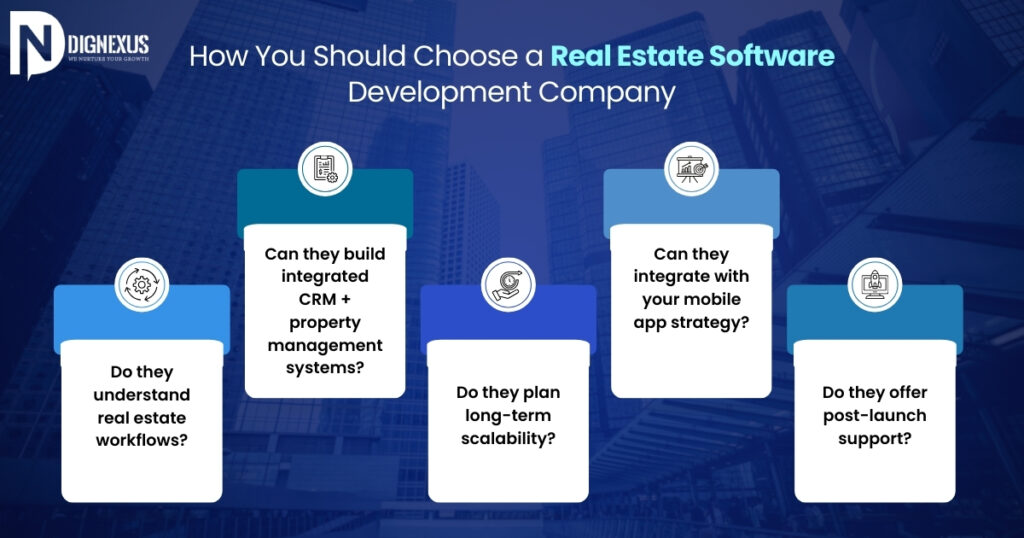
Before choosing a development partner, consider these questions:
- Do they understand real estate workflows?
- Can they build integrated CRM + property management systems?
- Do they plan long-term scalability?
- Can they integrate with your mobile app strategy?
- Do they offer post-launch support?
Adopting technology without a clear strategy creates more problems than it solves.
Key Features of a Scalable Real Estate Software System
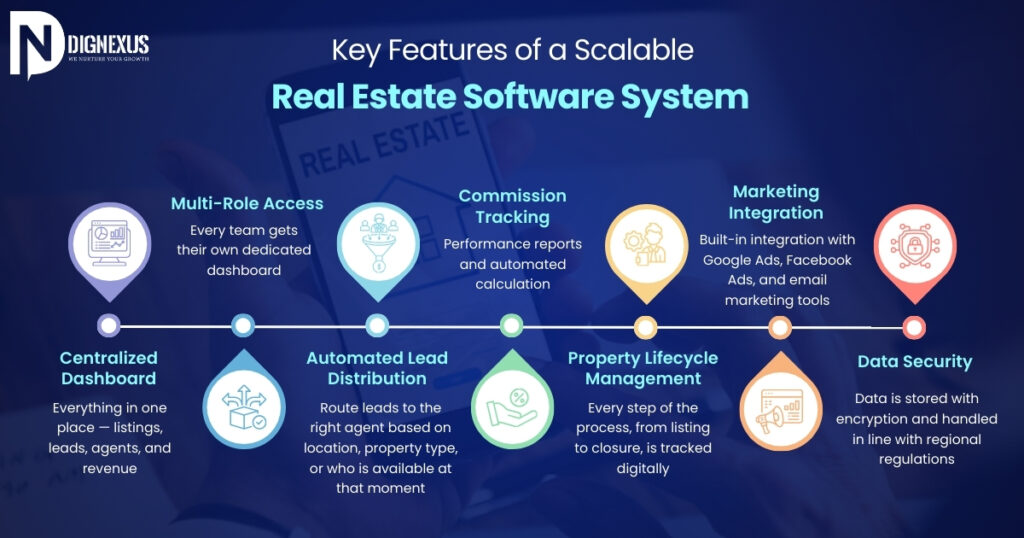
Here is what a real estate software ecosystem built for global operations should have:
- Centralized Dashboard
Everything in one place — listings, leads, agents, and revenue.
- Multi-Role Access
Every team gets their own dedicated dashboard — admins, agents, property managers, and finance teams all working from a view built for them.
- Automated Lead Distribution
Route leads to the right agent based on location, property type, or who is available at that moment.
- Commission Tracking
Performance reports and automated calculation.
- Property Lifecycle Management
Every step of the process, from listing to closure, is tracked digitally.
- Marketing Integration
Built-in integration with Google Ads, Facebook Ads, and email marketing tools.
- Data Security
Data is stored with encryption and handled in line with regional regulations.
Who Needs Custom Real Estate Software?
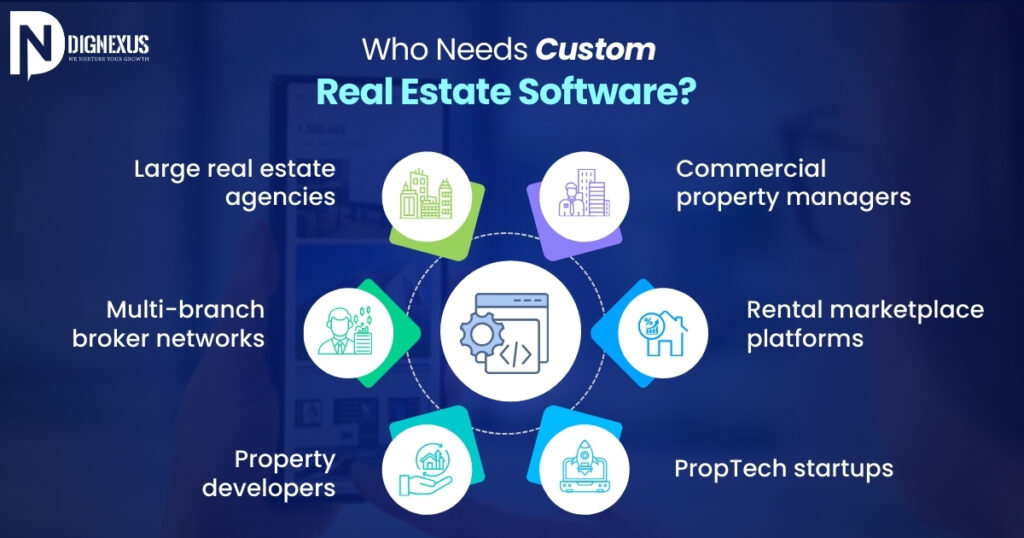
- Large real estate agencies
- Multi-branch broker networks
- Property developers
- Commercial property managers
- Rental marketplace platforms
- PropTech startups
Managing multiple projects or locations with generic tools will only get harder as you grow. At that scale, custom development becomes a necessity.
Final Thoughts
Real estate businesses with structured digital ecosystems consistently outperform their competitors in speed, efficiency, and profitability.
When custom property management software, integrated CRM, and a solid mobile strategy work together, they form the backbone of a high-performing operation.
For those serious about scaling globally, automating day-to-day processes, and closing more deals, investing in strategic software development is the logical next step.