30
April
2025
Mobile App vs. Website: Which One Will Truly Benefit Your Business in 2025?
In 2025, choosing between a mobile app and a website depends on your business model, customer behaviour, and digital strategy. This comprehensive guide explores their differences, strengths, and ROI potential. You’ll also find real-world use cases and answers to commonly asked questions like “Do small businesses really need mobile apps?” and “Is a responsive website enough today?”
Introduction
In the digital-first world, choosing between a mobile app and a website is more than just a tech decision, it’s a growth strategy. Both platforms have unique benefits depending on your business model, user expectations, and budget. But which should come first?
Let’s explore this in depth, along with newer, hybrid solutions like PWAs (Progressive Web Apps) and AI personalization strategies.
Real-World Examples
- E-commerce: Amazon thrives with both a powerful app and website. Their app boosts retention via personalized deals and alerts.
- Service Providers: Uber, Zomato, and Swiggy rely heavily on mobile apps due to real-time tracking and personalized UX.
- Local Businesses: A well-optimized local SEO website helps small businesses appear on Google Maps and search.
Mobile App vs. Website: The Basics
| Feature | Mobile App | Website |
| Installation | Downloaded from app stores | Accessible via any browser |
| Accessibility | Offline + real-time performance | Online only, needs internet |
| Personalization | Advanced, data-rich customization | Limited via cookies or user accounts |
| Cost | Higher initial + maintenance cost | More budget-friendly |
| Discoverability | Found via app stores or ads | SEO-friendly, discoverable via search engines |
| Update Process | Requires store approval + user downloads | Instant changes via CMS or code |
| Engagement | Push notifications, home screen presence | Limited to email, pop-ups, or SMS |
| Security | Device-level + developer-controlled | Browser-based protection mechanisms |
Why Choose a Mobile App?
- Push Notifications = Better Retention
Keep users engaged with timely reminders, offers, and updates. - Offline Access
Apps can function without an internet connection—ideal for travel, health, or gaming apps. - Native Integration
Access features like GPS, camera, calendar, and payments seamlessly. - Brand Recall
Users see your app icon daily—excellent for branding and loyalty. - Higher Conversions
Studies show mobile app users convert 3x more than website visitors in e-commerce scenarios.
Why Go with a Website?
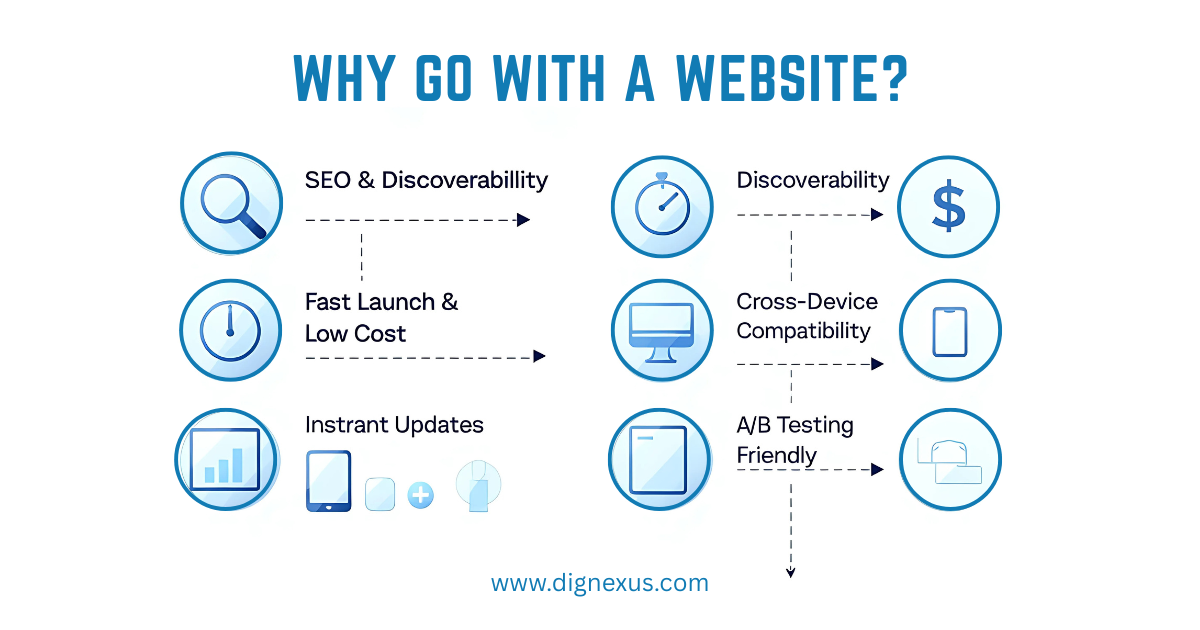
- SEO & Discoverability
Websites are indexed by Google, which boosts traffic and brand awareness organically. - Fast Launch & Low Cost
Websites are quicker to build, update, and scale. - Cross-Device Compatibility
No matter the device, iOS, Android, or desktop, websites work everywhere. - Instant Updates
No app store delay, just publish and go. - A/B Testing Friendly
Marketers can test headlines, CTAs, and layouts instantly.
Real Questions. Clear Answers.
1. Do I need a mobile app if I already have a website?
Not necessarily. If your website is mobile-friendly and serves its purpose (like bookings, info, or purchases), an app may not be needed. However, if user engagement, retention, or offline access is critical, then an app adds value.
2. Which is better for SEO—an app or a website?
A website is much better for SEO. Google can index websites, making them searchable. Apps rely on App Store visibility and don’t impact search rankings directly.
3. Can a mobile app replace a website?
Rarely. Apps are great for engagement, but websites are crucial for discovery and accessibility. Most modern businesses need both, strategically integrated.
4. Which is more cost-effective for small businesses?
Websites usually have a lower initial investment. Apps offer long-term engagement benefits but require ongoing development and platform-specific support.
5. Is a mobile app necessary in 2025?
For industries like food delivery, fitness, finance, and e-commerce—yes. For content-heavy or B2B brands, a responsive website may be sufficient, at least initially.
Industry Trends in 2025
- Progressive Web Apps (PWAs) are closing the gap between websites and apps.
- Voice search & AI integration are increasingly mobile-centric.
- App clips and instant apps allow lightweight app functionality without full installs.
- Mobile-first indexing by Google makes responsive websites non-negotiable.
What about Progressive Web Apps (PWAs)?
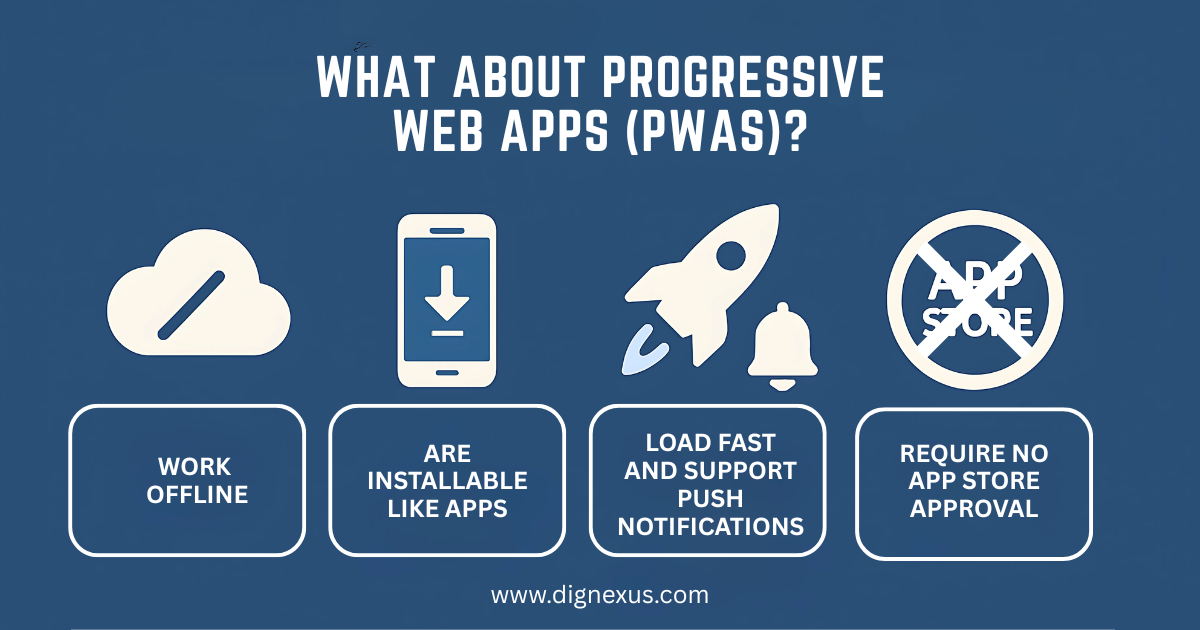
PWAs bridge the gap between websites and apps. They:
- Work offline
- Are installable like apps
- Load fast and support push notifications
- Require no app store approval
Business Use Case: Starbucks’ PWA doubled daily active users while halving bounce rates.
Verdict: If budget is tight but you want app-like power, PWAs are a smart middle ground.
Don’t Overlook These Key Factors
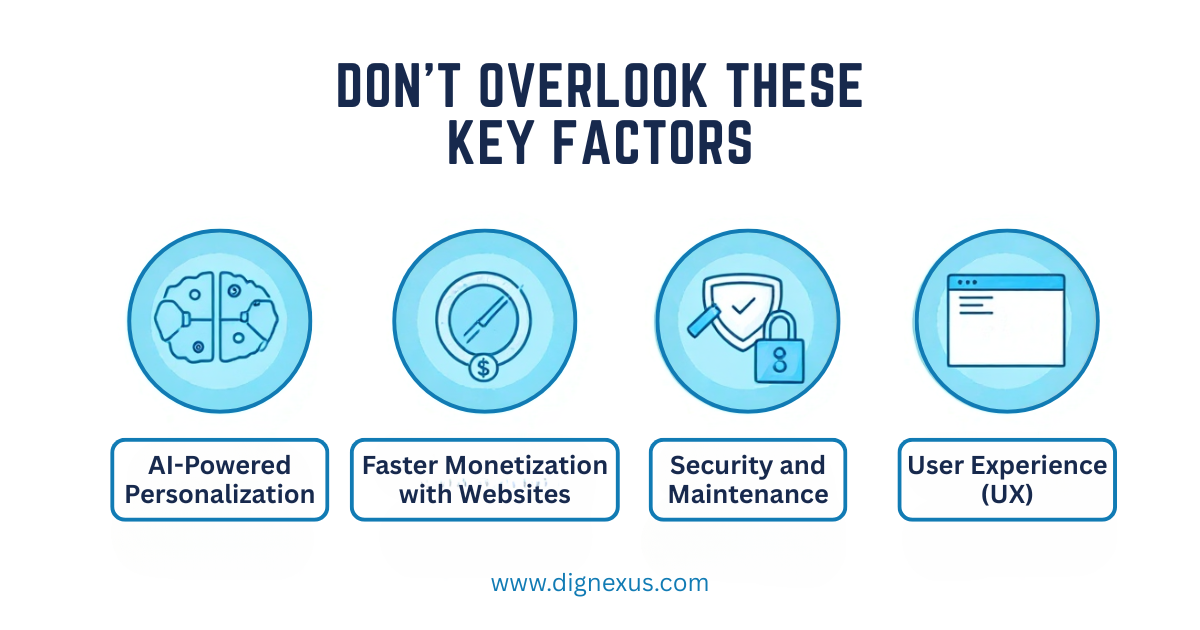
1. AI-Powered Personalization
- Apps offer more robust AI-based recommendations, ideal for retail, media, and learning platforms.
- Example: Netflix and Amazon mobile apps tailor content in real time based on user data.
2. Faster Monetization with Websites
- Direct payment gateways (Stripe, Razorpay) help websites avoid 30% app store cuts.
- Ideal for SaaS, consulting, and e-learning platforms.
3. Security and Maintenance
- Apps require regular updates to remain secure across OS versions.
- Websites benefit from browser-enforced standards but still need SSL, firewalls, and DDoS protection.
4. User Experience (UX)
- Native apps offer fluid, intuitive interactions.
- Websites can offer great UX if well-optimized, but performance can degrade on mobile.
Quick Checklist: Which Platform Fits You Best?
| Your Need | Best Choice |
| Reach new customers via Google | Website or PWA |
| Retain existing users | Mobile App |
| Launch quickly and test ideas | Website |
| Offer offline access or real-time tools | App or PWA |
| Personalize deeply via AI | App |
| Keep costs low initially | Website or PWA |
| Run loyalty programs, gamification | Mobile App |
| Avoid 3rd party fees on transactions | Website |
Essential Q&A for Business Decision-Makers
Which Platform Offers Better ROI for Small to Mid-Sized Businesses?
For most small businesses, a website offers quicker and more cost-effective ROI through SEO visibility, broader reach, and easier updates. However, mobile apps provide higher engagement and repeat customer value, making them a better long-term investment for businesses with high customer interaction (e.g., eCommerce, fitness, or food delivery).
Which Is Better for Lead Generation—App or Website?
Websites are superior for lead generation due to better SEO, landing pages, and form integration. Apps are better for nurturing and converting repeat customers but not for initial lead acquisition.
How Do I Decide if My Business Really Needs a Mobile App?
Ask yourself, do you need to send push notifications? Will your users return often or interact daily? Is offline access or device integration important? If the answer is yes to most of these, a mobile app can offer great value.
Building a high-performing app at this scale typically means partnering with experienced engineers, which is why many growing companies turn to specialised mobile app development services to access vetted talent without the overhead of hiring a full in-house team.
What Industries Benefit the Most From Mobile Apps in 2025?
Industries like e-commerce, fitness, banking, travel, healthcare, food delivery, and education benefit the most. If your business involves frequent customer touchpoints, real-time updates, or loyalty programs, a mobile app will enhance performance.
Can My App Replace My Sales Team or Customer Service Team?
Partially. Apps can automate communication, show product catalogs, and allow ordering, but human-led support is still critical—especially for B2B or service-based industries. Use apps to augment, not replace, your team.
How Can I Measure the Success of My App or Website?
Track KPIs like the following: – Website: Bounce rate, session duration, conversion rate, and traffic sources. App: Daily active users (DAU), retention rate, in-app purchases, and engagement time.
What’s the Biggest Mistake Businesses Make When Choosing Between an App and a Website?
Focusing on trends over strategy. Some invest in an app just because competitors have one, ignoring whether it aligns with user behavior or goals. Always begin with a user-first, business-outcome-driven approach.
Final Thoughts & Recommendations
At Dignexus, we don’t just build apps or websites—we help businesses choose what’s right for their growth. Our approach focuses on your goals, budget, and industry trends.
In 2025, the winning formula isn’t just a mobile app or website. It’s understanding your users’ journey and crafting the right digital experience for each touchpoint.
👉 Still unsure? Let’s schedule a discovery call to assess what suits your business best.
Whether you’re exploring web development services, mobile app developers, or hybrid solutions like PWAs, Dignexus can help you create a digital experience that grows with your business.